

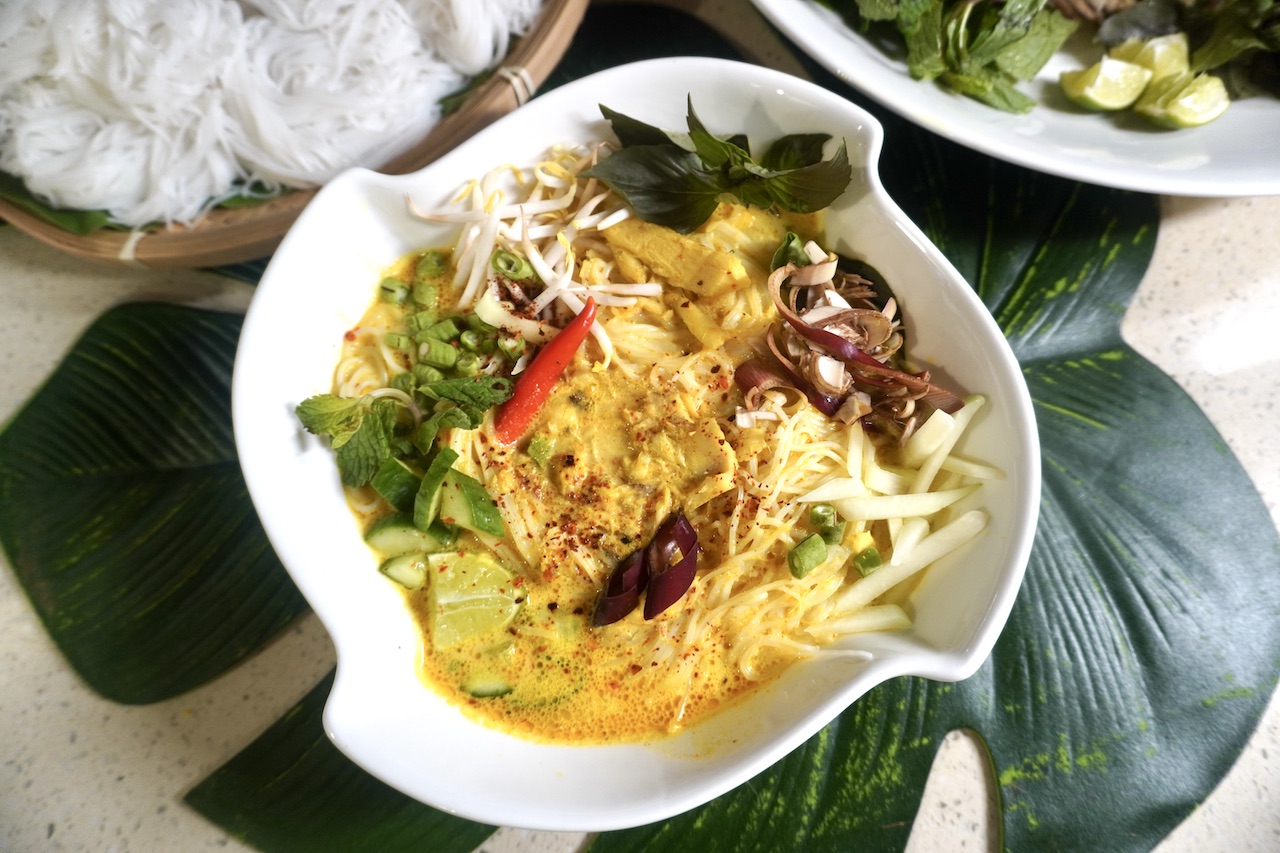
Khmer Rice Noodles with Fish Curry


Ingredients

For Fish Curry:

  • 1.5 kg fish (Snakefish, Tilapia, Cod or Seabass, cleaned)
  • 2 litres water
  • 2 stalks lemongrass (tender inner part, bruised)
  • 2 kaffir lime leaves, torn
  • 2 chicken bouillon cubes
  • 200ml Kara UHT Coconut Cream
  • 1–2 tablespoon Cambodian Prahok (Fermented Mud Fish) or use Fermented Fish sauce instead.
  • 1–2 tablespoon oil
  • Salt, as needed

For Kroeung (Cambodian Fresh Aromatic Paste)

  • 5 stalks lemongrass (tender inner part)
  • 3-4 finger roots (Krachai), if available
  • 4–5cm galangal
  • 3–4cm fresh turmeric
  • 4 kaffir lime leaves
  • 4 cloves garlic
  • 2 shallots
  • 1–2 dried red chilies
  • ½ tsp ground cumin
  • ½ tsp ground coriander
  • ¼ tsp black pepper
  • 2–3 coriander roots, cleaned

Noodles and Fresh Toppings

  • 300g fine rice vermicelli (Use fresh num banh chok rice noodles if you can find them.)
  • Banana blossom
  • Bean sprouts
  • Cucumber
  • Long beans
  • Fresh mint
  • Thai/Cambodian basil
  • Vietnamese mint, if available
  • Shredded cabbage
  • Lime wedges
  • Fresh chilies

Method

  1. Cook the noodles according to package instructions. Drain, rinse under cold water, and keep immersed in cool water. Roll into individual serving bundles, gently press out excess water, and arrange on a plate to dry slightly.
  2. Cook the fish. Bring the water to a gentle simmer, adding the lemon grass and kaffir lime leaves. Add the fish and simmer gently for 10 minutes, or until just cooked.
  3. Remove the fish and reserve the cooking liquid. Carefully remove the bones, and keeping the fish in flakes or small pieces.
  4. Prepare the Kroeung. Pound all the ingredients for the ‘kroeung’ into a fine aromatic paste. Do not add water to the ingredients. Traditionally pestle and mortar is used, but a good liquidiser makes the job a lot faster.
  5. Prepare the Fresh toppings. Arrange all the fresh vegetables, shredded, julienned or chopped on a large serving platter.
  6. Cook the curry. Heat the oil in a large wok. Fry the kroeung over medium-low heat until fragrant. Add the chicken bouillon cubes and stir it in. Add the reserved fish stock and simmer for 5 minutes. Add 1 Tbsp fermented fish sauce first, then adjust gradually to taste.
  7. Stir in Kara UHT Coconut Cream briskly and simmer briefly, then return the flaked fish to the curry and simmer gently for 2–3 minutes.
  8. Assemble and serve. Place the cooked rice noodles in individual bowls. Ladle the hot fish curry over the noodles and serve with the fresh vegetables and herbs.

Notes:

  • Cambodian Prahok (Fermented Mud Fish) is traditionally salted and crushed or pounded into a thick paste. It has a much stronger, pungent aroma and deeper flavour than Thai Fish sauce, which is a thin, clear, amber-brown liquid with a salty, savoury, umami flavour. If you are unable to find Cambodian Prahok, use what is available to add savouriness, but the flavour won’t be identical.
  • The sliced banana blossom should be placed in lemon or tamarind water till plating, to keep it from oxidising and turning dark.
  • Krachai (Finger root) is an aromatic rhizome from the ginger family, used in Southeast Asian cooking, including some Cambodian curry pastes. Its slender, finger-like roots grow in a cluster, which is why it is also called Chinese keys. It has an earthy, peppery, slightly ginger-like aroma that works particularly well with fish.  There is no direct substitute, but you can use Coriander root if you do not have Krachai. Do not add ginger or add extra galangal to compensate for the absence of this ingredient.
  • Nom Banh Chok is much lighter and more herbaceous than a typical coconut curry. Don’t make the gravy excessively thick or coconut-heavy because the star should be the fresh kroeung + fish + fermented fish umami, with the raw vegetables providing crunch and freshness.

Source & Credits: https://www.youtube.com/c/RecipesaresimpleVideos


Related Recipes